Looking back across a decade and a half of Living Water programs to understand what worked, what endured, and where the model can grow.
The Ripple Effects Study is a mixed-methods, multi-country evaluation of Living Water International's completed WASH Program Areas (WPAs) since 2012, assessing long-term outcomes across WASH access, infrastructure sustainability, church and community engagement, and human flourishing.
It is the most rigorous independent assessment of LWI program impact in our history, conducted to publishable quality with plans for peer-reviewed publication in 2027 and 2028.
The study is structured around three questions: What are the ripple effects of our work? What has endured? Where can we grow?
Sixteen completed WASH Program Areas across nine countries in Africa, Latin America, and the Caribbean. Phase 1 reviews all sixteen programs; Phase 2 selects six countries for primary field research.
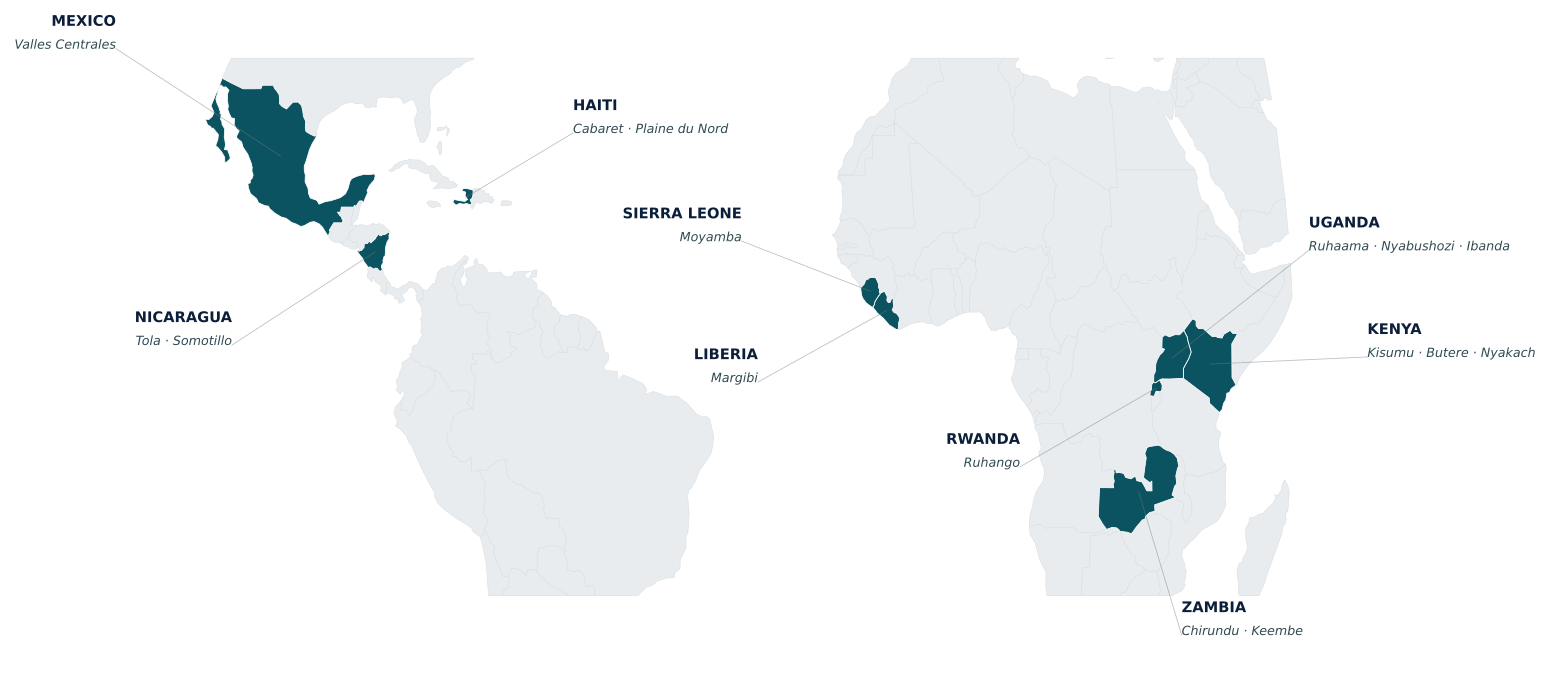
Kenya · Liberia · Rwanda · Sierra Leone · Uganda · Zambia
Haiti · Mexico · Nicaragua
A WASH Program Area (WPA) is Living Water's core program model: a geographically focused engagement that runs for five to seven years and serves 50,000 to 70,000 people. WPAs combine WASH infrastructure, water-quality testing, sanitation and hygiene promotion, and church and community mobilization through Living Water's Flourish framework.
The first WPA launched in Uganda in 2012. As of mid-2025, sixteen WPAs across nine countries had completed implementation. The Ripple Effects Study evaluates this body of completed work.
Join the practitioners, researchers, and funders who'll use this study to build on their own work. One email when Phase 1 publishes in August 2026; one when Phase 2 publishes in 2027. Nothing else.
